
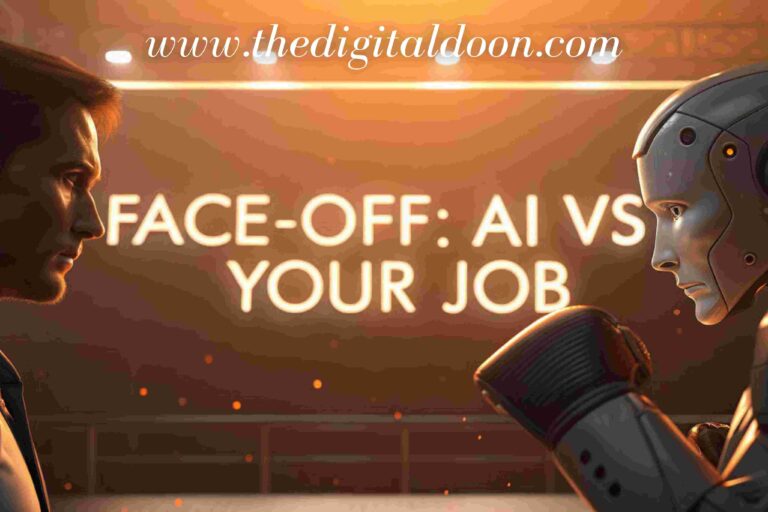
In 2025, digital marketing didn’t crash. It transformed. Quietly, rapidly, and without waiting for anyone’s permission. While headlines screamed about AI “taking jobs,” the truth was more uncomfortable. AI didn’t replace marketers. It replaced outdated roles, shallow skills, and task-based work. By 2026, the gap between marketers who adapted and those who didn’t has become impossible to ignore.
If you work in digital marketing today, this question matters more than ever: Is my role still valuable, or is it just easy to automate?
Let’s break down the digital marketing jobs that were hit hardest in 2025 and understand what 2026 will demand from anyone who wants to stay relevant.
1. Generic Content Writers Were the First to Go
One of the earliest casualties of AI was generic content writing. Blogs written only to “fill the website,” product descriptions with no personality, and SEO articles that said the same thing as every other page on the internet were replaced almost instantly. AI tools learned to generate grammatically correct, readable content at scale, and businesses realized they no longer needed humans for low-effort writing.
What stopped working was writing without insight, originality, or experience. What still works is content that has opinions, real examples, storytelling, and authority. AI can write words, but it cannot replace lived experience, industry understanding, or a strong point of view. Writers who evolved into content strategists, thought leaders, or brand storytellers stayed relevant. The rest struggled.
2. Keyword-Only SEO Executives Lost Value
For years, SEO jobs revolved around keywords, meta tags, backlinks, and reports. In 2025, AI-powered SEO platforms automated most of these tasks. Search engines like Google became far better at understanding intent, context, and user satisfaction rather than just keyword placement.
SEO professionals who only knew how to follow checklists found themselves replaced by software. What survived was strategic SEO. Marketers who understood search intent, content depth, topical authority, user experience, and conversion optimization became more valuable than ever. SEO didn’t die. Mechanical SEO did.
3. Social Media Posting Roles Became Obsolete
Scheduling posts, adding hashtags, and writing basic captions was once a full-time job. In 2025, AI tools began handling posting schedules, content suggestions, hashtag research, and even caption generation based on engagement data. Brands no longer needed someone whose only skill was “posting daily.”
The professionals who survived understood community building, brand voice, content formats, and audience psychology. Social media shifted from execution to strategy. AI could handle posting, but it couldn’t build trust, manage communities, or shape brand perception. Those who upgraded their skills stayed in demand.
4. Ad Campaign Operators Faced Heavy Pressure
Running ads used to require manual bid adjustments, audience testing, and constant monitoring. In 2025, AI-driven ad platforms optimized campaigns in real time. Budget allocation, bidding strategies, and performance adjustments became largely automated.
Media buyers who relied only on platform-level tactics struggled. The marketers who survived focused on offer creation, funnel design, creative strategy, messaging, and understanding customer psychology. AI can optimize ads, but it cannot fix a bad offer or weak positioning. Strategy became more important than execution.
5. Email Marketers Using Templates Fell Behind
Bulk email blasts and copy-paste templates lost effectiveness fast. AI tools began personalizing emails at scale, predicting open rates, optimizing subject lines, and adjusting send times automatically. Generic newsletters stopped performing.
What remained valuable was lifecycle marketing. Marketers who understood customer journeys, segmentation, behavioral triggers, retention, and long-term relationship building continued to grow. Email marketing didn’t disappear. Lazy email marketing did.
6. Basic Analytics and Reporting Roles Were Automated
Creating reports, dashboards, and performance summaries was another area AI disrupted. Automated tools began generating insights in plain language, reducing the need for manual reporting.
Marketers who only presented numbers without interpretation lost relevance. The ones who survived were those who translated data into decisions. Businesses still needed people who could answer the question: What should we do next based on this data? Insight replaced information.
7. The Real Pattern: Task-Based Jobs Are at Risk
If there’s one clear pattern from 2025, it’s this: jobs built around repeatable tasks are easy to automate. AI excels at speed, consistency, and scale. Humans excel at judgment, creativity, strategy, and understanding people.
The real danger in 2026 isn’t AI itself. It’s staying in a role that adds no strategic value. If your work can be explained as “I do X task every day,” that task is likely already being automated or soon will be.
What Skills Actually Matter in 2026?
Digital marketing jobs are not disappearing. They’re evolving. In 2026, the most valuable marketers are those who think like business owners, not executors.
Skills that are growing in demand include:
- AI-assisted marketing strategy
- Content thinking, not just content creation
- Brand building and positioning
- Funnel design and CRO
- Marketing automation planning
- First-party data and retention strategy
- Creative direction and messaging
Knowing how to use AI tools is no longer optional. It’s the baseline. The real advantage comes from knowing when, why, and how to use them.
A Hard Truth Most Marketers Avoid
Job titles matter less than outcomes now. Companies don’t want an “SEO executive” or “social media manager.” They want growth, leads, revenue, and retention. Marketers who tie their work directly to business impact will thrive. Those who hide behind outdated job descriptions will struggle.
AI didn’t kill digital marketing careers in 2025. It exposed weak ones. And in 2026, the gap will widen even further.
Final Thoughts
If you’re worried about your future in digital marketing, that’s not a bad thing. Awareness is the first step. The solution isn’t to fight AI or fear it. The solution is to evolve alongside it.
Use AI to increase your speed, not replace your thinking. Focus on skills that require judgment, creativity, and understanding human behavior. That’s where humans still win.
The choice isn’t whether AI will change your career. It already has. The real choice is whether you adapt and grow—or get left behind.